
Ayurveda branch
8 sub division of Ayurveda.
Dr Dushyant Nirmal
9/15/20252 min read

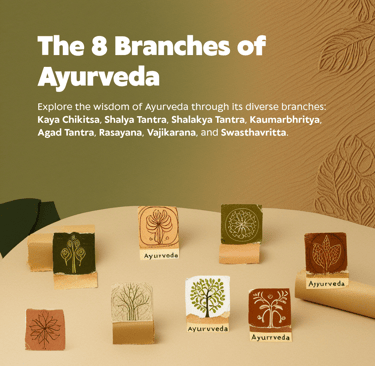
Introduction to the eight branches of Ayurveda, known as the Ashtanga Ayurveda by Dr Dushyant Nirmal traditional Indian medicine Ayurvedic Doctor in Germany
Ayurveda, the ancient "science of life" from India, is a holistic system of medicine that is comprehensively organized into eight specialized branches. This structure mirrors the specialization found in modern medicine and highlights the sophistication of ancient Indian medical science.
Here are the eight branches:
1. Kāyachikitsā (Internal Medicine) The most well-known branch, it deals with the diagnosis and treatment of general diseases affecting the entire body (kaya), particularly those related to the digestive system and metabolism. It focuses on balancing the three doshas (Vata, Pitta, Kapha).
2. Bālachikitsā (Pediatrics) This branch focuses on the care of children, from infancy through adolescence. It includes prenatal and postnatal care for the mother and baby, childhood diseases, and guidelines for nutrition and development. It is also known as Kaumārabhṛtya.
3. Graha Chikitsā (Psychiatry) Dedicated to mental health, this branch deals with the treatment of psychological disorders. It addresses ailments believed to be caused by negative energies (grahas), which correspond to modern understanding of psychiatric conditions, epilepsy, and disorders of the mind.
4. Ūrdhvānga Chikitsā (Treatment of Head & Neck) This is the Ayurvedic equivalent of ENT (Ear, Nose, and Throat). It focuses specifically on diseases affecting the organs above the neck—eyes, ears, nose, throat, and head. Many procedures in this branch are precursors to modern surgery.
5. Shalyā Chikitsā (Surgery) A highly advanced branch for its time, it involves the removal of foreign bodies (shalya) and the surgical treatment of conditions like abscesses, fractures, hemorrhoids, and hernias. Ancient Ayurvedic texts describe over 100 surgical instruments and various techniques.
6. Damstra Chikitsā (Toxicology) This branch deals with the diagnosis and treatment of poisoning from animal bites (e.g., snakes, insects), plant-based toxins, and mineral/minetal toxins. It also covers topics related to air and water pollution, making it remarkably forward-thinking.
7. Jara Chikitsā (Geriatrics / Rejuvenation) Focused on promoting longevity and healthy aging, this branch is known as Rasāyana. It uses specific tonics, dietary regimens, and lifestyle practices to slow the aging process, enhance vitality, and prevent degenerative diseases.
8. Vṛsha Chikitsā (Aphrodisiac Therapy) This branch, known as Vājīkaraṇa, deals with increasing sexual vitality and fertility. It aims to promote the health of the reproductive tissues, ensure the conception of a healthy child, and treat sexual dysfunctions for both men and women.
Together, these eight branches form a complete medical system aimed at treating the individual as a whole—body, mind, and spirit—and promoting a long, healthy, and balanced life.